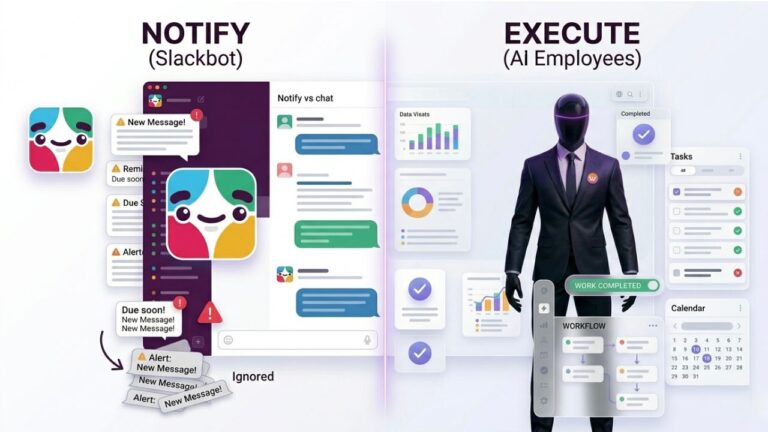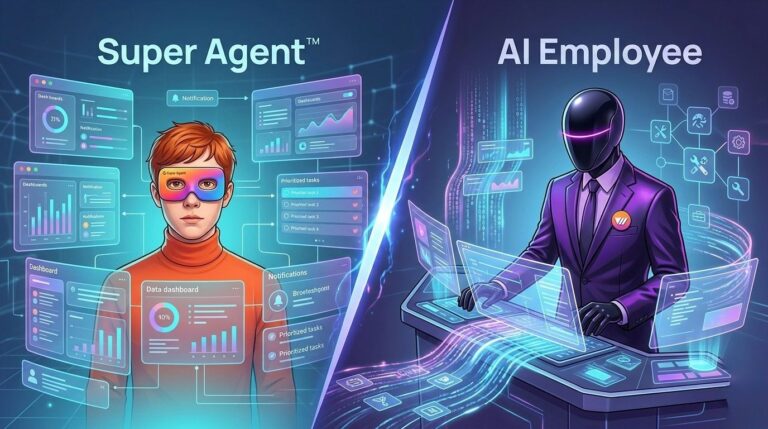
When execution is no longer dependent on follow-ups, memory, or manual coordination but is embedded into systems that ensure outcomes, startups stop operating in chaos and start scaling with precision.


The narrative that startups fail due to a lack of ideas is fundamentally flawed. In reality, the modern entrepreneurial landscape is saturated with ideas, many of which are viable, differentiated, and well-researched.
Yet, only a small fraction translates into enduring businesses.
The distinction lies in execution.
Execution, however, is often misunderstood as effort—working longer hours, completing more tasks, or maintaining high activity levels. In practice, execution is the systematic ability to convert decisions into outcomes, consistently and at scale, under constraints.
This is precisely where most startups begin to struggle.
Startups scale with execution systems not only with effort.
The Breakdown of Execution in Growing Startups
In the early stages, execution appears deceptively simple. Small teams operate with high alignment, decisions are implemented quickly, and visibility is almost immediate. However, as the organization begins to grow—even slightly—this simplicity erodes.
Work becomes fragmented across tools. Communication becomes layered. Responsibilities become diffused. Founders increasingly shift from building the business to ensuring that the business is being built.
The underlying issue is not inefficiency in individuals but the absence of a unified execution system.
Most startups attempt to solve this problem using a combination of tools, including project management software, CRMs, communication platforms, and spreadsheets. While these tools improve organization, they do not solve the core problem.
They create visibility into work.
They do not guarantee its completion.
As a result, execution becomes inconsistent. Tasks are initiated but not followed through. Opportunities are identified but not capitalized upon. Activity increases, yet outcomes remain unpredictable.
Workly: Structuring Execution as a System
Workly addresses this gap by reframing execution not as a collection of tasks, but as a connected system of workflows, responsibilities, and outcomes.
Instead of distributing work across multiple disconnected tools, Workly centralizes execution into a single operational layer where tasks, projects, and workflows are not only tracked but structurally aligned.
This alignment produces clarity. Every action is linked to ownership, every process follows a defined path, and every stage of work is visible in context.
However, structure alone is insufficient.
A well-organized system can still fail if it depends entirely on human intervention to move forward.
This is where the role of AI Employees becomes critical.
AI Employees: Embedding Execution Within the System
AI Employees extend Workly from a management platform into an execution engine.
Their significance lies not in performing isolated tasks but in ensuring uninterrupted workflow progression. By reducing manual follow-ups, AI employees increase efficiency, decrease errors, and enable teams to focus on higher-value work.
To understand their impact, it is essential to examine outcomes rather than functions.
In sales processes, for instance, execution gaps are often subtle yet costly. A delayed follow-up, an unupdated lead status, or a missed interaction can result in lost revenue. These are not strategic errors; they are failures of execution continuity.
AI Employees remove this variability by ensuring consistent follow-ups, automatically initiated based on predefined logic. Lead progress is updated in real time, offering transparency at every step. All interactions are triggered systematically rather than manually, increasing process reliability.
The outcome is a more reliable and predictable revenue process, where opportunities are consistently pursued, and conversion potential is fully realized.
Operational Throughput Without Organizational Strain
A similar transformation occurs in internal operations.
Startups expend a considerable portion of their effort on coordination, assigning tasks, monitoring progress, resolving dependencies, and ensuring alignment. While necessary, these activities consume time without directly contributing to output.
Within Workly, AI Employees absorb this coordination layer.
Workflows are designed to advance autonomously. Task dependencies trigger subsequent actions. Status changes occur without manual updates. Bottlenecks are surfaced proactively rather than reactively.
This leads to a fundamental shift:
execution throughput increases without a proportional increase in human effort.
The organization becomes capable of handling greater complexity and higher workloads without immediate expansion in team size. Growth is supported by systems, not constrained by them.
Speed as an Embedded Capability
In competitive markets, speed is not merely advantageous; it is decisive.
However, speed is rarely limited by how quickly individuals can work. It is limited by how efficiently work moves through the system.
Delays occur in transitions between tasks, between people, and between decisions and actions.
AI Employees eliminate these transitional delays. By ensuring that actions are triggered instantly and processes continue without interruption, they embed speed directly into execution.
The result is a startup that operates with continuous momentum, where responsiveness becomes a structural advantage rather than a situational one.
Consistency, Predictability, and Scalable Growth
When execution is system-driven, consistency emerges naturally.
Processes are followed uniformly. Actions occur at the right time. Outcomes become stable rather than variable. This consistency builds trust both internally and externally.
More importantly, it creates the foundation for scalability.
As the startup grows, the same execution system continues to function effectively. Increased workload does not introduce chaos. Complexity does not disrupt flow.
Growth becomes structured, controlled, and sustainable.
Conclusion: From Managing Work to Ensuring Outcomes
The central challenge for startups is not the absence of ideas or even effort. It is the absence of systems that ensure execution.
Workly, combined with AI Employees, represents a shift from managing work to ensuring outcomes.
It transforms execution from a human-dependent activity into a system-driven capability, one that is reliable, scalable, and measurable.
In such an environment, progress is no longer uncertain. It is engineered.
And ultimately, that is what separates startups that struggle from those that scale.
FAQs
What makes AI Employees different from automation?
AI Employees don’t just execute tasks; they ensure workflows continue and outcomes are achieved without manual follow-ups.
Will AI Employees replace my team?
No. They handle repetitive tasks, allowing your team to focus on strategy, creativity, and decision-making.
How does Workly improve productivity?
By reducing coordination overhead, automating execution, and ensuring tasks move forward without delays.
Is Workly useful for small startups?
Yes. It helps small teams operate with structure, speed, and consistency without needing to hire early.
What is the biggest benefit of using Workly with AI Employees?
It turns execution into a system, making outcomes predictable, scalable, and no longer dependent on manual effort.
AI-First Collaborative OS
Stop managing tools. Start running work.


Emily Carter
Technical writer specializing in SaaS product documentation and in-app guides. Converts engineer-heavy inputs into clear user journeys, FAQs, and release notes.