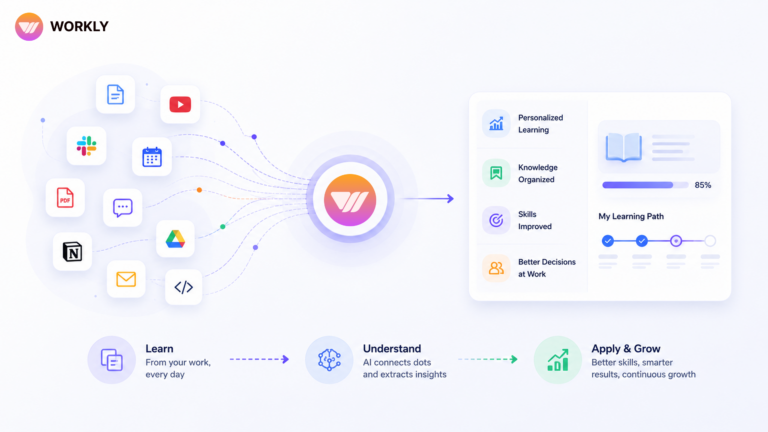
Workly cuts manual reporting noise so finance teams can focus on accuracy and smarter decisions

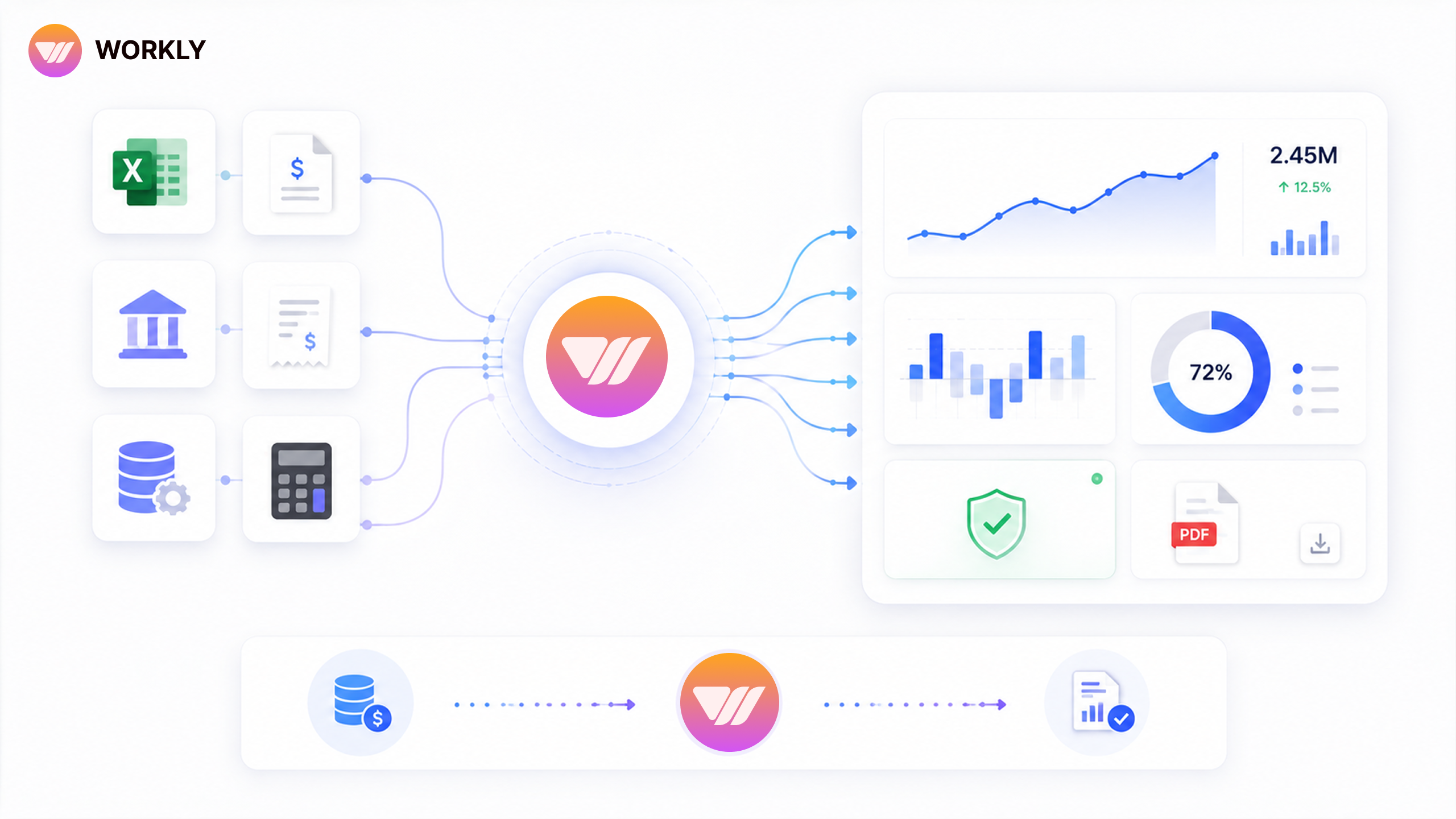
Manual reporting quietly taxes the whole finance function
Finance teams carry enormous responsibility. They must be accurate, timely, compliant, and clear. Yet too much of their week is still spent on manual reporting: pulling numbers from different sources, formatting recurring updates, checking versions, reminding departments for inputs, and explaining why one figure does not match another.
This work is necessary, but it should not consume the team’s best thinking. Workly AI Employee gives finance teams a superior operating layer for recurring reporting. It helps automate the repetitive parts, preserve reporting context, and flag the issues that deserve human attention.
Monthly management reports, budget reviews, collections summaries, expense snapshots, and forecast updates often follow a familiar format. The problem is that teams still recreate too much of the process manually. Workly can learn reporting rhythms, remind owners for inputs, keep formats consistent, and reduce the coordination burden around every reporting cycle.
That consistency matters. When reporting formats keep changing, leaders lose time decoding the report instead of acting on it. With Workly, finance can create a more dependable rhythm. The AI Employee helps keep structure, ownership, and timing aligned so reports arrive cleaner and faster.
Finance reports move faster when chasing ends.
Accuracy improves when context stays connected
Manual reporting errors often happen because context is scattered. A number changes in one place but not another. A department sends a late update. A manager uses an older version. A note about an exception sits in an email thread instead of the report file.
Workly AI Employee helps reduce that risk by keeping the work around reporting connected. It can track inputs, preserve notes, identify missing updates, and surface anomalies that need review. It does not replace financial judgment. It protects financial judgment from avoidable administrative noise.
- Missing department inputs become visible earlier.
- Repeated reporting formats become easier to maintain.
- Unusual changes can be flagged for review before leadership sees the report.
- Follow-ups become part of the workflow instead of a separate reminder chain.
The finance ROI is time, trust, and faster decisions
The return on Workly is not only the hours saved while preparing reports. The deeper ROI is trust. Leaders trust the rhythm of reporting. Finance trusts that follow-ups are not being forgotten. Teams trust that the latest context is visible. Decisions become faster because the reporting process feels more reliable.
A finance team that spends less time rebuilding recurring reports has more time for analysis, scenario planning, cost control, and strategic guidance. That is where finance creates real value. Workly helps move the team toward that higher-value role.
Finance teams also need better collaboration from everyone else
Reporting delays are not always created inside finance. They often begin when other departments send late inputs, unclear notes, or numbers without context. Finance then becomes responsible for cleaning the entire organisation’s reporting discipline. Workly helps by making those dependencies explicit.
The AI Employee can remind department owners, track what has been received, and preserve the assumptions behind changes. This improves collaboration because finance is no longer forced to manually chase every stakeholder. Workly makes reporting a shared operating process instead of a private finance struggle.
Some reporting issues are obvious. Others are subtle: an expense category shifts unexpectedly, a recurring figure is missing, a department submits a number that does not match the previous trend, or a report arrives with a changed definition. Workly can help flag these exceptions so finance reviews the right items sooner.
This does not mean every unusual number is wrong. It means the team has a better way to focus attention. Finance professionals can apply judgment where judgment is needed most, while Workly reduces the chance that a meaningful anomaly hides inside routine work.
The leadership experience becomes more dependable
For executives, the best finance report is not only accurate. It is dependable. It arrives in a known format, explains meaningful movement, and gives leadership enough context to act. Workly helps finance deliver that experience more consistently.
That consistency raises the status of the finance team. Instead of being seen as the department that asks for updates, finance becomes the department that gives the business superior decision intelligence.
Better reporting also improves cross-functional discipline
When finance uses Workly, other departments become better partners in the reporting process. Inputs need owners, assumptions need context, and deadlines need visibility. Workly makes those expectations easier to maintain without finance sounding like it is constantly chasing.
That improves the culture around numbers. Reporting becomes a company-wide discipline, not a monthly burden carried by finance alone. The AI Employee helps every team contribute to cleaner, faster, more dependable financial insight.
Finance gains more room for strategic partnership
When manual reporting pressure falls, finance can spend more time advising the business. The team can analyse cash flow, explain cost movement, challenge assumptions, and support smarter planning. Workly does not make finance less human. It gives finance professionals a superior foundation for the high-value work they were hired to do: guiding decisions with accuracy, context, and confidence
The strongest finance teams are remembered for clarity, not chaos. Workly helps them deliver that clarity repeatedly by connecting numbers, owners, deadlines, and context in one superior workflow.
From number chasing to financial intelligence
Finance should not be reduced to spreadsheet assembly. The best finance teams are strategic interpreters of the business. They see risk early, explain trade-offs clearly, and help leadership act with confidence. Workly AI Employee supports that future by taking pressure off the manual layer.
With Workly, recurring reporting becomes smoother, exceptions become easier to find, and the finance team gains a superior system for turning financial work into dependable business intelligence.
FAQ’S
How does Workly AI Employee reduce manual reporting?
Workly helps finance teams manage recurring reporting workflows, remind stakeholders for inputs, preserve context, and flag missing information earlier. This reduces the manual coordination around reports so finance can spend more time on analysis and decision support.
Can Workly help with recurring finance reports?
Yes. Workly can support recurring reporting rhythms such as monthly updates, budget reviews, expense snapshots, collections summaries, and forecast check-ins. It helps keep owners, timelines, formats, and assumptions more consistent from one reporting cycle to the next.
How does Workly improve reporting accuracy?
Many reporting errors happen when context is scattered across files, messages, and older versions. Workly helps keep inputs, notes, follow-ups, and anomalies connected to the workflow, giving finance teams a clearer review layer before reports reach leadership.
Does Workly replace finance professionals?
No. Workly supports the administrative and coordination layer around finance work. Financial judgment, interpretation, compliance, and strategic guidance remain human responsibilities. Workly helps protect that judgment by reducing avoidable reporting noise.
How does Workly improve collaboration between finance and other teams?
Reporting depends on timely inputs from across the organisation. Workly helps make those dependencies visible, reminds department owners, tracks what has been received, and preserves assumptions behind changes. Finance can run a more reliable reporting process without constant manual chasing.
AI-First Collaborative OS
Stop managing tools. Start running work.


Rachel Nguyen!
Technical writer with a UX writing edge for enterprise products. Builds onboarding, contextual help, and knowledge bases that cut support tickets.