Hiring pipelines don’t fail at sourcing; they break between steps. Delays in feedback, scheduling, and follow ups stall momentum. Workly fixes this by turning hiring into a system that moves automatically.

Introduction
Most HR teams think hiring slows down because of a lack of candidates or poor sourcing strategies. But if you look closely at how recruitment actually unfolds, the real issue is not at the top of the funnel, it’s in the transitions. Candidates enter the pipeline with momentum, but somewhere between interviews, feedback, and decisions, that momentum fades. Days pass between actions, communication becomes inconsistent, and what looked like a structured process turns into a series of disconnected steps.
This is where hiring pipelines quietly fail. Not in planning, not in strategy but in execution. And the more roles you hire for, the more these small inefficiencies compound into major delays, missed opportunities, and candidate drop offs.
Make hiring processes faster with Workly
Hiring Doesn’t Break at Entry It Breaks in Transition
A hiring pipeline may look clean on a dashboard, but the real experience is far messier. An interview gets completed, but feedback doesn’t arrive on time. A candidate is shortlisted, but no one takes ownership of scheduling the next round. An offer is ready, but communication is delayed just enough for the candidate to lose interest or accept another opportunity.
These are not isolated issues, they are patterns. And they exist because every stage in hiring depends on someone remembering to act. The system itself doesn’t ensure movement; it simply records status. As a result, progress becomes inconsistent, and hiring speed becomes unpredictable.
The Hidden Cost of “Just One Delay”
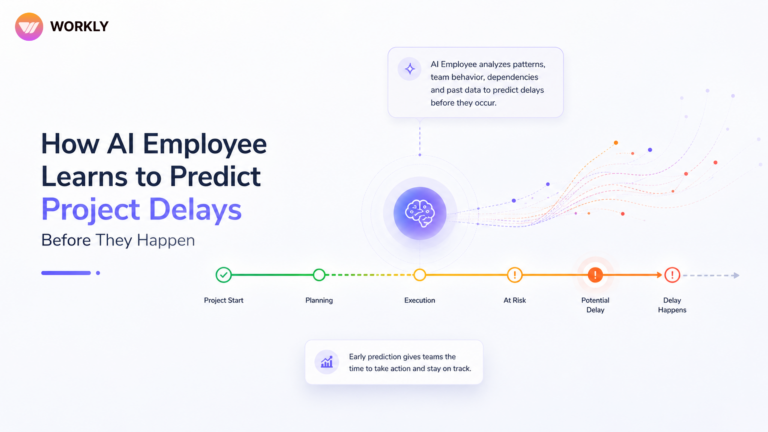
In recruitment, delays are rarely dramatic. They are small, almost invisible. A few hours here, a missed follow-up there. But these delays stack up. A feedback delay pushes scheduling. A scheduling delay affects candidate engagement. A communication gap creates uncertainty. Over time, what could have been a fast, smooth hiring process turns into a prolonged cycle.
More importantly, candidates interpret these delays as signals. Slow responses suggest disinterest. Unclear timelines create doubt. In a competitive hiring market, this often means losing top talent not because of compensation or role fit, but because of poor execution.
Why Traditional Tools Don’t Solve This Problem
Most recruitment tools are designed to bring structure and visibility. They organize candidates into stages, store data, and provide dashboards. But they stop short of ensuring that actions actually happen. They rely on users to update statuses, send reminders, and move candidates forward.
This creates a dependency on manual effort. HR teams become the ones driving execution—following up with interviewers, coordinating schedules, updating systems, and ensuring nothing slips through the cracks. The tool supports the process, but it doesn’t run it.
As hiring scales, this model starts to break. More roles mean more coordination, more follow-ups, and more chances for delays. Efficiency doesn’t scale with volume—it declines.
The Real Problem: Execution Is Not System-Driven
At its core, hiring today is still human-driven in areas where it should be system-driven. Execution depends on memory, discipline, and constant oversight. If someone forgets, delays, or deprioritizes a task, the entire pipeline slows down.
This is why even well-structured hiring processes feel chaotic in practice. The system does not enforce progress—it merely reflects it. And without a mechanism to ensure continuous movement, pipelines become reactive instead of proactive.
Workly: Turning Hiring into a Continuously Moving System
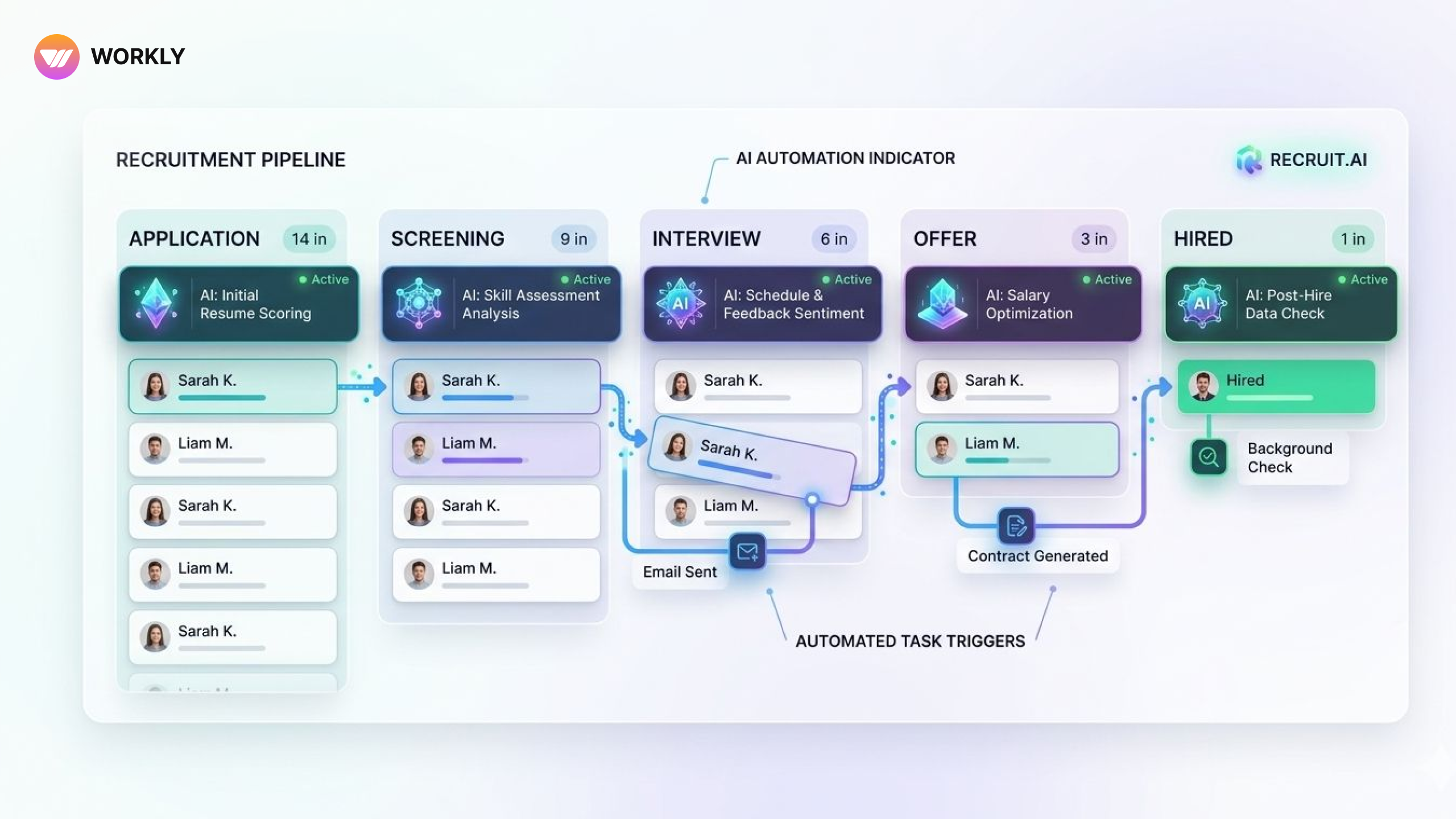
Workly approaches this problem differently. Instead of focusing only on organizing hiring workflows, it introduces an execution layer that ensures those workflows actually run. The goal is not just to track candidates, but to keep them moving consistently and without friction.
This shift changes the nature of the hiring pipeline. It is no longer a static structure that requires constant manual input. It becomes a dynamic system where each step naturally leads to the next, and where delays are actively prevented rather than passively observed.
The Role of the AI Employee in Closing Execution Gaps
At the center of this system is Workly’s AI Employee, which functions as an active participant in the hiring process rather than a passive tool. It monitors progress across stages, identifies where movement is required, and takes action to ensure that nothing stalls.
Instead of HR teams chasing interviewers for feedback, the system prompts and follows up automatically. Instead of coordinating schedules manually, it aligns availability and confirms meetings. Instead of relying on someone to move a candidate forward, the system ensures transitions happen as soon as conditions are met.
This removes the dependency on constant human intervention and replaces it with consistent, system-driven execution.
From Follow-Ups to Built-In Workflow Behavior
- One of the biggest shifts Workly introduces is turning follow-ups into a built-in part of the workflow. In traditional systems, follow-ups are tasks that someone has to remember and execute. In Workly, they are automatic responses triggered by the system.
- If feedback is delayed, the system nudges the interviewer. If a candidate hasn’t responded, it sends reminders. If a step is pending for too long, it escalates the issue. This ensures that momentum is maintained without requiring HR teams to constantly monitor and intervene.
- Over time, this dramatically reduces the cognitive load on HR teams and eliminates one of the biggest sources of inefficiency in hiring.
Maintaining Candidate Momentum and Experience
A well-executed hiring pipeline doesn’t just improve internal efficiency it directly impacts candidate experience. When communication is timely, scheduling is seamless, and transitions are smooth, candidates feel valued and engaged.
Workly ensures that this consistency is maintained throughout the pipeline. Candidates are not left waiting for updates or wondering about next steps. Every interaction happens at the right time, creating a sense of professionalism and reliability.
This is especially critical in competitive hiring environments, where experience often becomes the deciding factor.
Making Hiring Predictable and Scalable
When execution is consistent, outcomes become predictable. Hiring timelines stabilize, bottlenecks are minimized, and teams can plan with greater confidence. This predictability is what allows organizations to scale their hiring efforts without losing efficiency.
Workly enables this by removing variability from execution. Instead of relying on individual effort, the system ensures that processes are followed consistently across all roles and teams. As a result, scaling hiring no longer means increasing complexity—it simply means increasing volume within a stable system.
Conclusion
The biggest misconception in recruitment is that better hiring comes from better tracking or more tools. In reality, it comes from better execution. Pipelines don’t fail because they lack structure, they fail because they lack continuous movement.
Workly addresses this by transforming hiring into a system that doesn’t just organize work, but actively drives it forward. With its AI Employee handling execution across stages, HR teams are no longer burdened with coordination and follow-ups. Instead, they can focus on what truly matters, identifying and securing the right talent.
In the end, efficient hiring is not about doing more. It’s about ensuring that what needs to happen actually happens on time, every time.
FAQ’S
What causes delays in hiring pipelines?
Delays are usually caused by execution gaps between stages, such as late feedback, scheduling conflicts, and missed follow-ups, rather than issues in sourcing candidates.
How does Workly improve hiring efficiency?
Workly ensures continuous execution by automating scheduling, follow-ups, and stage transitions, reducing dependency on manual coordination.
Can Workly integrate with existing HR systems?
Yes, Workly integrates with 1000+ tools, allowing teams to enhance their workflows without replacing existing systems.
How does Workly improve candidate experience?
By ensuring timely communication and smooth transitions, Workly creates a faster and more consistent hiring journey for candidates.
Is Workly suitable for scaling hiring operations?
Yes, Workly enables scalable hiring by maintaining consistent execution across multiple roles without increasing manual workload.
AI-First Collaborative OS
Stop managing tools. Start running work.


Emily Carter
Technical writer specializing in SaaS product documentation and in-app guides. Converts engineer-heavy inputs into clear user journeys, FAQs, and release notes.