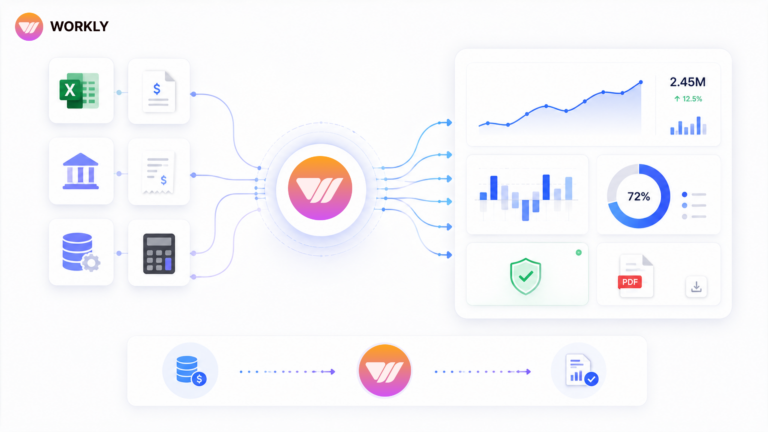
AI is evolving beyond automation tools into intelligent workplace collaborators that help teams organize faster, think clearer, and work with far less operational chaos.

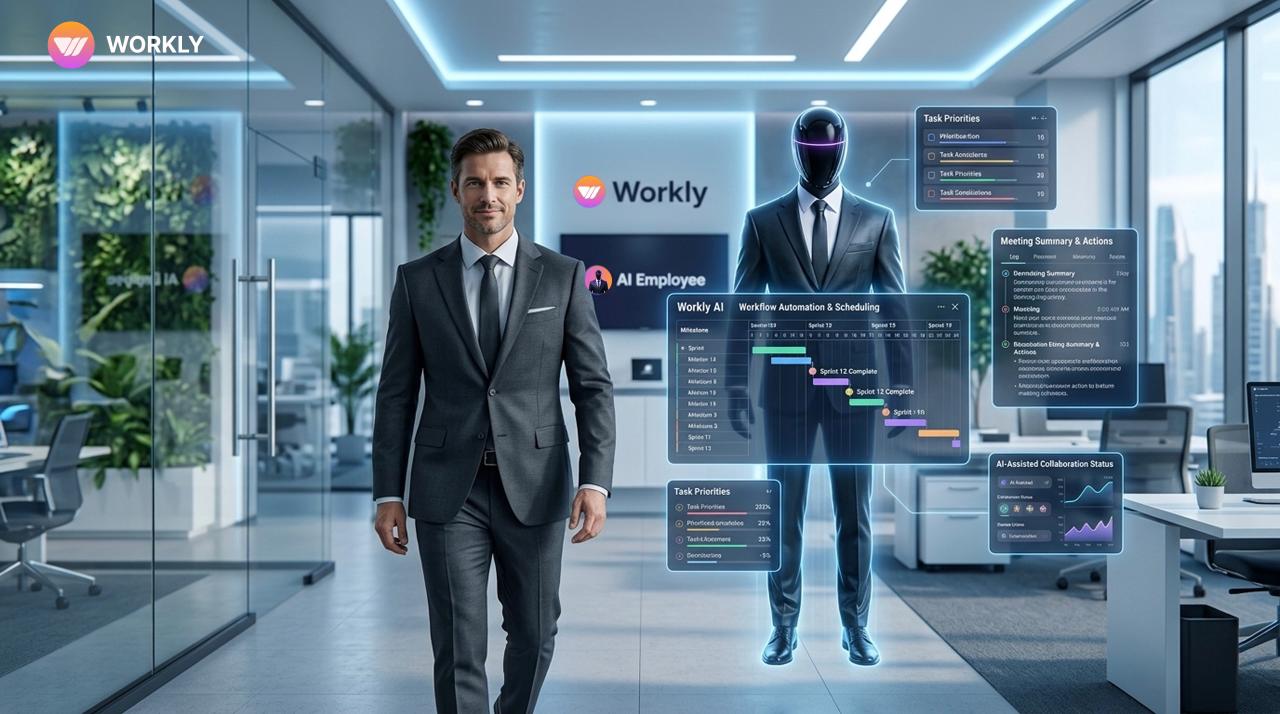
A few years ago, having five tabs open felt busy.
Today, professionals manage five communication platforms before breakfast.
Modern work has become a constant stream of updates, approvals, meetings, notifications, dashboards, follow-ups, and context switching. Teams are faster than ever, yet somehow more exhausted. Everyone is connected all the time, but very few people feel fully in control of their workday anymore.
And that’s because the nature of work itself has changed.
The average employee is no longer just doing their job. They are also acting as:
- a scheduler
- a coordinator
- a prioritizer
- an information manager
- a reminder system
- a follow-up machine
A huge part of the modern workday is spent organizing work instead of actually doing it.
That’s why the next evolution of AI isn’t just automation.
It’s companionship inside the workflow.
The future employee may come with an AI counterpart built in.
Work Is Becoming Too Complex for Humans Alone
The biggest workplace challenge today isn’t lack of talent.
It’s operational overload. Employees are expected to remember deadlines, manage conversations across multiple apps, track progress updates, respond instantly, prepare meeting notes, organize tasks, and still produce high-quality work without losing focus.
The mental pressure of modern work is no longer coming from difficult thinking. It’s coming from constant coordination. And coordination fatigue is becoming one of the biggest hidden productivity killers inside companies.
That’s exactly where Workly AI Employee changes the future of work.
AI Is No Longer a Background Tool
You opened apps. You searched for information. You organized tasks manually. You updated statuses yourself.
Traditional tools waited for humans to operate them. Workly AI Employee works differently. Instead of behaving like software sitting quietly in the background, it acts like an active workplace partner that continuously supports your day in real time.
It understands your workflow. Tracks your priorities. Identifies what needs attention. And handles operational clutter before it overwhelms you.
The shift is subtle but powerful.
You stop “managing work.”
And start moving through work with support.
Your AI Colleague Starts Working Before You Do
Imagine opening your laptop in the morning and already having:
- your most important priorities ranked clearly
- overnight updates summarized instantly
- meeting prep notes ready
- urgent blockers highlighted
- routine follow-ups already handled
- your calendar optimized automatically
Instead of beginning the day overwhelmed, you begin with clarity.
That’s what Workly AI Employee delivers. Not just productivity assistance. Operational breathing room.
What Workly AI Employee Actually Feels Like
Instead of forcing you to manually sort through every message, Workly AI Employee automatically organizes incoming communication into actionable categories. A company-wide newsletter? Silently summarized.A meeting request without urgency? Scheduled for later review. A repetitive follow-up email? Automatically acknowledged professionally. An urgent client issue before a deadline? Escalated instantly. This creates something most professionals rarely experience anymore: uninterrupted mental space. Rather than checking Slack every few minutes or constantly refreshing inboxes, employees can stay focused on high-value work while the AI handles background communication intelligently.
The Most Valuable Employees of the Future May Not Work Alone
In the future, high-performing professionals probably won’t be the people handling everything manually. They’ll be the people who know how to collaborate effectively with AI. Because AI Employees dramatically reduce the invisible workload that slows modern teams down:
- coordination
- organization
- communication overload
- repetitive admin work
- task tracking
- information sorting
That allows humans to focus on the things humans are best at:
- creativity
- leadership
- strategy
- storytelling
- emotional intelligence
- decision-making
AI doesn’t replace those skills. It creates more space for them.
“The future workplace isn’t humans versus AI. It’s humans operating with AI support by default.”
Every Employee May Soon Have an AI Counterpart
Right now, having an AI Employee feels innovative. Very soon, it may feel normal. Just like email became standard, just like cloud collaboration became standard just like remote work became standard. The next workplace shift is likely this: Every employee gets an AI counterpart helping manage operational complexity in real time. Not replacing their role. Enhancing their capacity.
Imagine entire teams where:
- meetings summarize themselves
- tasks reorganize dynamically
- deadlines update intelligently
- communication gets filtered automatically
- workflows self-optimize continuously
That changes how companies operate at every level.
Work becomes faster without becoming more chaotic
Why This Changes Workplace Culture Too
One of the most overlooked effects of AI Employees is emotional.
When people stop drowning in operational overload:
- stress decreases
- clarity improves
- communication becomes calmer
- teams feel more organized
- employees regain confidence in their workload
People don’t just work better. They feel better while working. That matters because burnout today often comes less from hard work — and more from fragmented work.
Workly AI Employee reduces fragmentation.
And that changes the entire rhythm of the workplace.
The Companies That Adapt Early Will Move Faster
The future workplace won’t be defined by which company has the most employees. It will be defined by which company removes friction most effectively.
Organizations using AI Employees will likely:
- make decisions faster
- reduce operational waste
- improve employee focus
- communicate more clearly
- execute with less chaos
Because when people stop spending energy managing work manually, more energy becomes available for meaningful progress
Final Thoughts
The workplace is entering a completely new phase.
AI is no longer just a tool sitting inside software dashboards. It’s becoming an active collaborator woven directly into the daily flow of work.
Workly AI Employee represents that shift. Not automation replacing people. But intelligent support helping people operate at their best. And in the future, the most successful professionals may not be the ones working the hardest alone.
They’ll be the ones working smartest alongside AI.
FAQ’S
How does Workly AI Employee support daily work?
Workly AI Employee helps employees start their day with clear priorities, summarized updates, organized action items, and automated follow-ups, making it easier to stay focused and productive throughout the day.
How can organizations prepare for AI-powered workplaces?
Organizations can start by identifying repetitive operational processes, reducing manual coordination work, and introducing AI-powered workflow support systems that help employees focus on high-value activities while improving execution and collaboration.
What makes Workly AI Employee different?
Workly AI Employee goes beyond basic automation by acting as a proactive workplace partner. It continuously monitors workflows, identifies priorities, manages operational tasks, and helps employees stay focused on impactful work rather than administrative overhead.
How does Workly AI Employee improve workplace productivity?
Workly AI Employee reduces administrative burden by automating routine coordination tasks, helping employees stay organized, prioritize effectively, and spend more time on meaningful work rather than managing operational details.
How is an AI Employee different from traditional AI tools?
Most AI tools perform specific tasks when prompted. An AI Employee works continuously across workflows, helping manage coordination, communication, scheduling, task tracking, and operational processes without requiring constant direction.
AI-First Collaborative OS
Stop managing tools. Start running work.


Rachel Nguyen!
Technical writer with a UX writing edge for enterprise products. Builds onboarding, contextual help, and knowledge bases that cut support tickets.